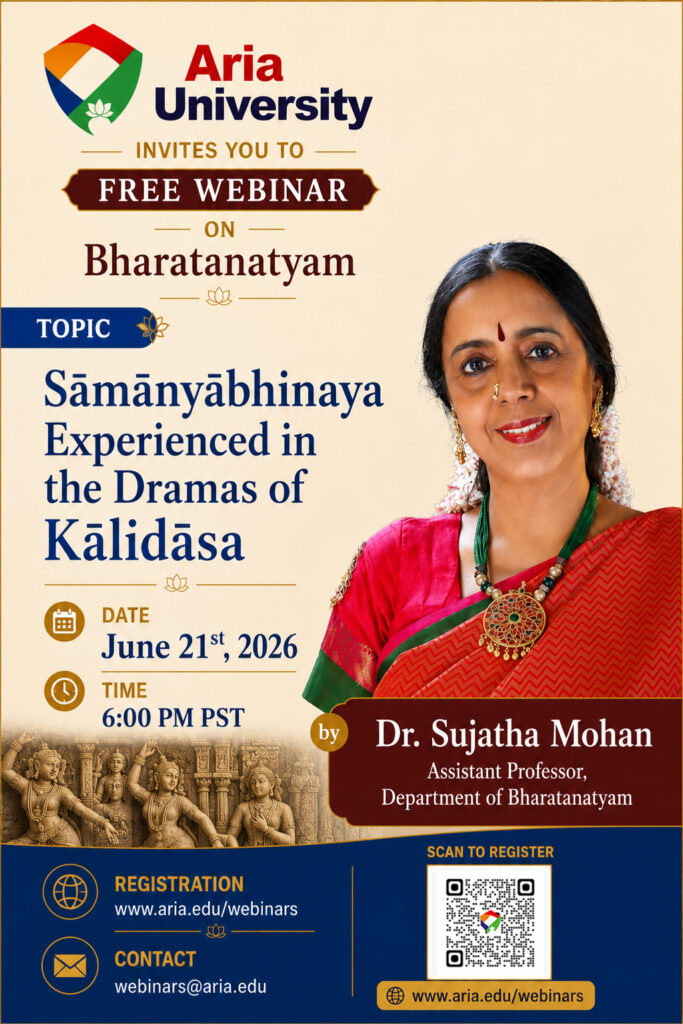
This lecture introduces the application of sāmānyābhinaya in the plays of Kālidāsa, focusing on Abhijñānaśākuntalam, Vikramorvaśīyam, and Mālavikāgnimitram. Drawing on the Nāṭyaśāstra, sāmānyābhinaya- the common histrionic representation through āṅgika, vācika and sāttvika abhinaya, is analyzed as a unifying aesthetic device that transcends character-specific citrābhinaya. The study identifies textual instances where Kālidāsa’s stage directions, poetic descriptions, and dialogues encode gestural, vocal, and psychophysical expression accessible to all actors. Through close textual reading and performance-based interpretation, the lecture demonstrates how Kālidāsa employs sāmānyābhinaya to evoke rasa, particularly śṛṅgāra, while maintaining dramatic universality. The findings suggest that Kālidāsa’s dramaturgy exemplifies the practical realization of Bharata’s theory, offering insights for contemporary Sanskrit theatre practice and pedagogy.
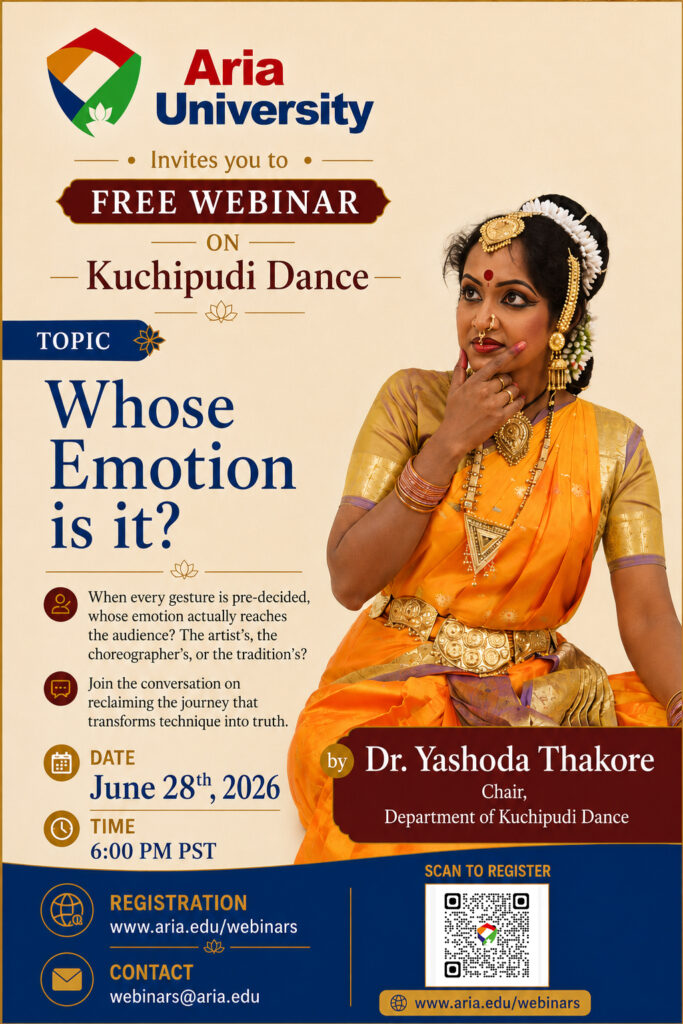
When every gesture is pre-decided, whose emotion actually reaches the audience? The artist’s, the choreographer’s, or the tradition’s? Join the conversation on reclaiming the journey that transforms technique into truth.
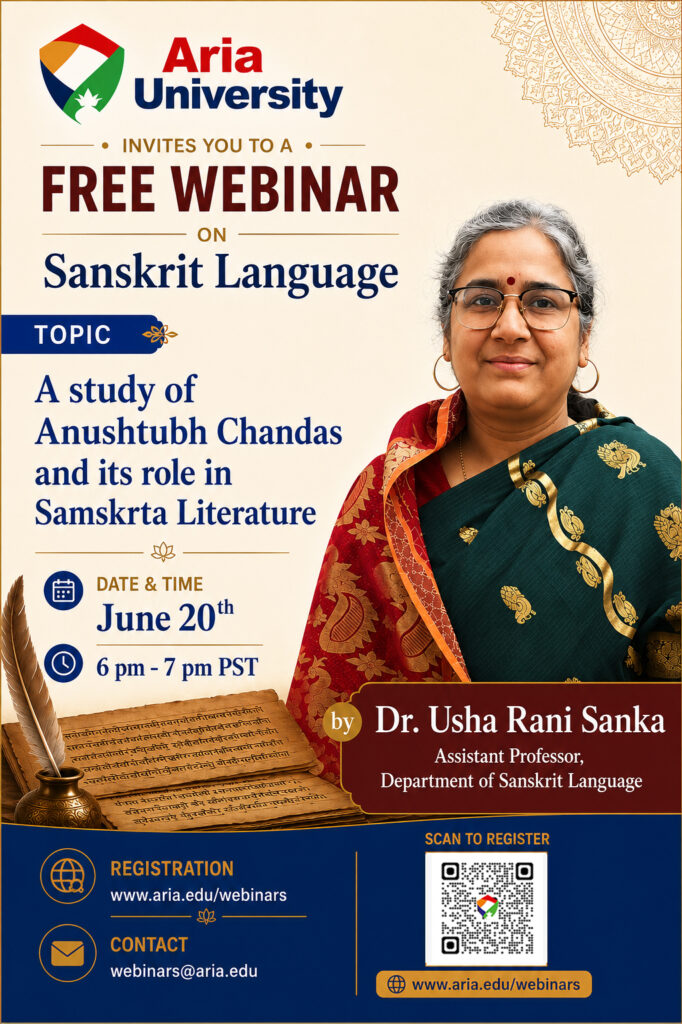
We pray to Bhagavan with “Shlokas”. We ask children to learn Shlokas and feel proud when they recite some verse. Shloka is the first meter someone aiming to write something in metrical format would love to compose. Most of the Samskrta works are in the same meter.. Vishnu Sahasra nama, Gita, Ramayana, Mahabharata, Puranas.. and the list is endless. Ever wondered why it is called a “shloka” or what is all that comes under the name shloka? What is Anushup Chandas? Lets explore the wondrous meter deeper and wider. Welcome to the Eight lettered Chandas.
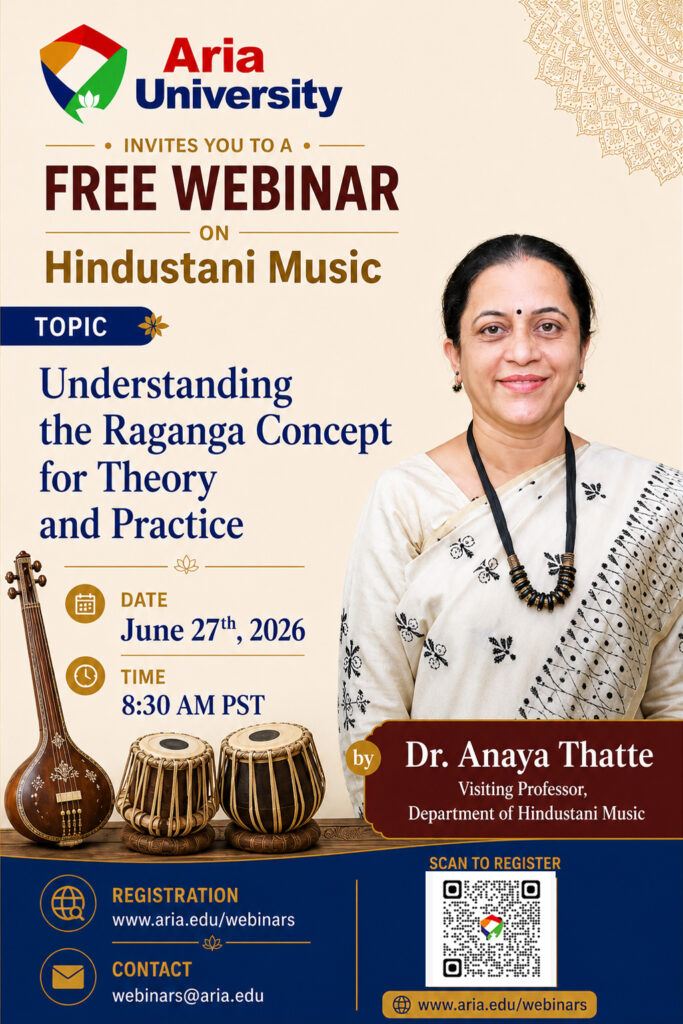
The webinar “Understanding Rāgaṅg Concept for Theory and Practice” explores Rāgaṅg as the foundation of Rāga classification in Indian Classical Music. It highlights how Rāgaṅg provides clarity in organizing Rāgas and emphasizes the role of characteristic phrases (pakad) in defining their identity. By bridging theoretical frameworks with practical applications, the session demonstrates how Rāgaṅg knowledge supports performance, improvisation, and pedagogy. Participants gain insights into Rāga families, phrase analysis, and case studies, fostering a holistic understanding of Rāgaṅg. Ultimately, the webinar equips learners to appreciate Rāgaṅg as both a systematic classification tool and a living tradition guiding musical creativity.
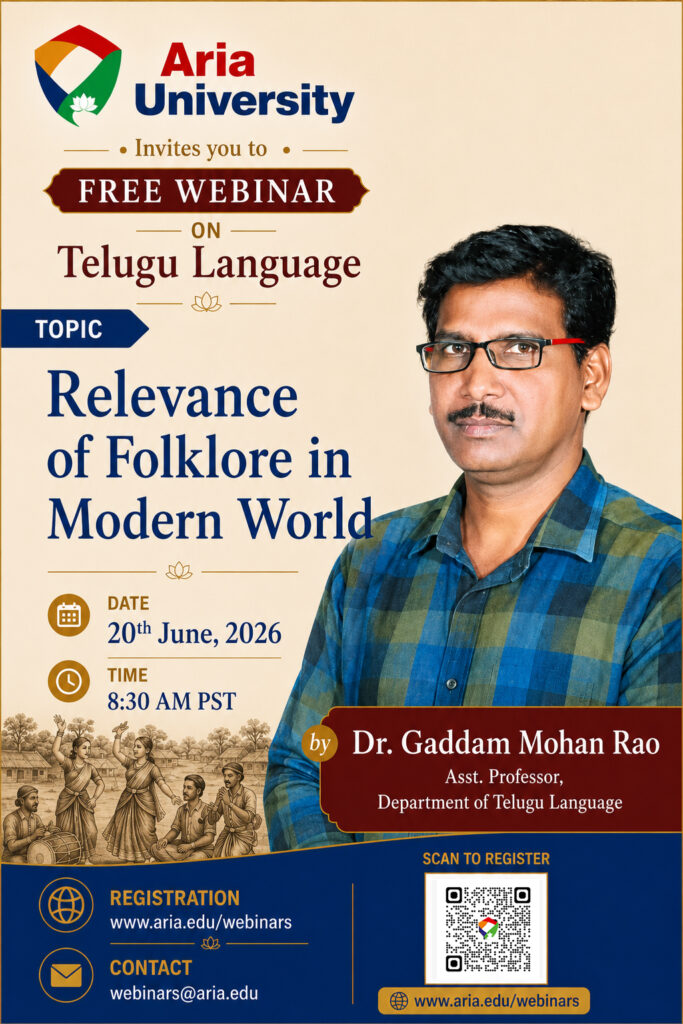
Folklore remains relevant in the modern world as it preserves cultural heritage, traditions and values for future generations. Folklore also strengthens cultural identity and promotes social unity.
The lecture will cover the vibrant devotional music landscape of India, focusing on Kirtan styles from various regions. It will explore the spiritual essence and cultural richness of various regions, thus, covering the intricacies and histories of all major kirtan styles practiced throughout India.
It is an accepted belief that Literature aims at the welfare of mankind. It is said to provide the necessary values that benefit society at large. At the same time, it provides entertainment, gives joy and fulfillment to the reader. As such, providing both enjoyment and enlightenment are the aims of literature. But, there are other definitions which say the purpose is dependent on the Poets’ perspective. On the one hand, it is the writer who decides what needs to be given to the society through his work; on the other hand, it is the prerogative of the reader who decides what is necessary for him/her. Mostly, the purpose of literature is still being decided by the perspective of the poet, while there is a demand that literature should become reader-centric rather than author –centric.
The Nāṭyaśāstra of Bharata Muni stands as the foundational treatise on Indian performing arts, encompassing drama, dance, and music. Among the classical dance traditions of India, Kuchipudi emerges as a living embodiment of the principles enshrined in the Nāṭyaśāstra.Rooted in Andhra Pradesh, Kuchipudi seamlessly integrates the Caturvidha Abhinayas—Āṅgika, Vācika, Āhārya, and Sāttvika—as elaborated by Bharata, translating theoretical concepts into vibrant performative expression. The dance-drama structure of Kuchipudi, its use of dialogue, narrative (nāṭya), and stylized movement (Nṛtta and Nṛtya), mirrors the dramaturgical conventions prescribed in the Nāṭyaśāstra. Further, the emphasis on Rasa and Bhāva in evoking aesthetic experience reflects Bharata’s vision of performance as a means of spiritual and emotional elevation (Rasānubhūti). The traditional male-oriented Bhāgavata Mela Nātaka tradition of Kuchipudi village exemplifies Nāṭyaśāstra’s synthesis of devotion, drama, and dance. Thus, Kuchipudi may rightly be described as a mirror image of the Nāṭyaśāstra—a dynamic continuum that preserves, interprets, and revitalizes Bharata’s ancient aesthetic wisdom through movement, expression, and theatrical vitality.
Chitra-kavya is an ancient Indian tradition of writing poetry in visual patterns, designs, or patterns (bandha) resembling objects (vastu) or their movements (gati) based on a brilliant, flexible arrangement of letters, words, and meanings. Thus, Chitrakavya can be explained as a “variety of poetry” or “picture poetry”. The speaker in this session would bring out the beauty of the Chitrakavyas in Sanskrit literature with illustrations.
The Sangita Ratnakara, penned by the great author Sharangadeva in the 13th century CE, stands as a highly influential text of the second millennium. Its content and context closely correlate with descriptions of dance techniques and traditions that flourished in Karnataka between the 12th and 14th centuries. This study explores the technical aspects outlined in the text and investigates their visual representation through the dance sculptures of the period, offering a comparative analysis between the textual and sculptural documentation of dance in medieval times & in karnataka region.
The timeless works of our ancient Vaggeyakaras form the soul of classical music performance. While these compositions possess great aesthetic and musical value, they also serve as rich sources of information in terms of both their melodic structures and lyrical content. This work intends to look beyond the scope of performance and explore the deeper layers, values, raga insights, and subtle messages that the composers may have consciously encoded into their creations.